
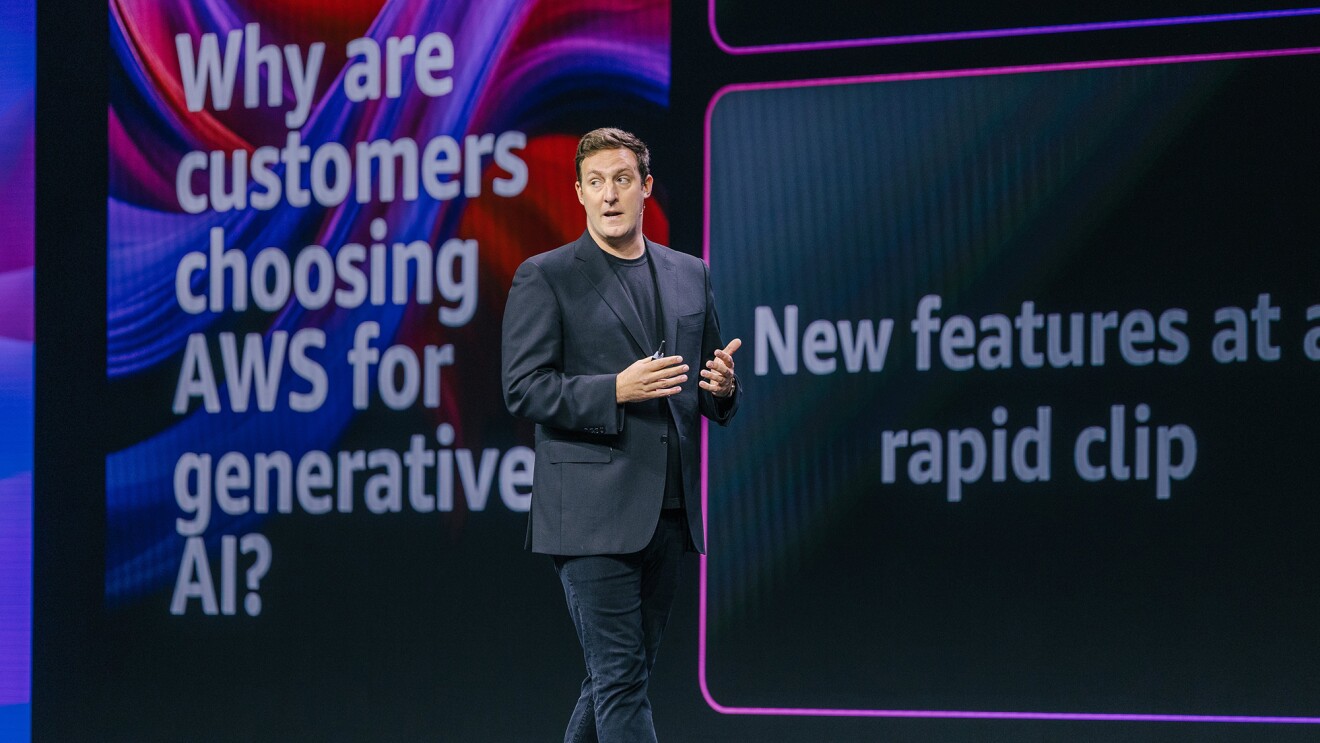
The landscape of artificial intelligence is moving at a blistering pace. Looking back at the AWS Summit New York 2024, it serves as a definitive turning point where the conversation shifted from “what is generative AI?” to “how can we scale generative AI for real-world business impact?” As we navigate through 2026, the foundational innovations unveiled at that summit have matured into the bedrock of modern cloud architecture.

This article explores the critical announcements from that landmark event, detailing how Amazon Web Services (AWS) democratized access to powerful AI tools, simplified development workflows, and set the stage for the current era of autonomous, intelligent applications.
The Democratization of AI: Amazon Bedrock and Beyond
At the heart of the 2024 summit was a clear mission: democratizing generative AI. AWS recognized early on that for AI to be truly transformative, it had to be accessible to developers regardless of their specific expertise in machine learning. By expanding the capabilities of Amazon Bedrock, AWS enabled organizations to choose from a diverse array of foundation models, including those from Anthropic, Meta, and Amazon’s own Titan models.
The strategy was simple yet profound: provide a serverless environment where enterprises could build, test, and deploy generative AI applications without the heavy lifting of managing underlying infrastructure. This approach allowed companies to focus on business logic and user experience rather than the intricacies of model training or GPU cluster orchestration.
Accelerating Development with AWS App Studio
Perhaps the most disruptive announcement at the 2024 summit was the introduction of AWS App Studio. Designed for technical professionals who are not necessarily software engineers, this service allows users to build secure, enterprise-grade applications using simple natural language prompts.
By leveraging generative AI to translate business requirements into functional application code, AWS effectively removed the “coding bottleneck.” In 2026, we see the ripple effects of this: internal tools that once took months to build are now being deployed in hours. This shift has empowered citizen developers within financial institutions, healthcare providers, and retail giants to innovate rapidly without waiting for traditional software development lifecycles.
Enhancing Developer Productivity with Amazon Q
The evolution of Amazon Q was another headline feature that fundamentally changed how developers interact with their cloud environment. Amazon Q is not just a chatbot; it is an expert assistant integrated directly into the IDE (Integrated Development Environment) and the AWS Management Console.
Key features highlighted during the summit included:
Code Transformation: The ability to automatically modernize legacy codebases, such as moving from older Java versions to current, more secure versions.
Conversational Debugging: Providing real-time insights into infrastructure errors, helping teams cut down mean time to resolution (MTTR) by significant margins.
- Security Scanning: Proactive identification of vulnerabilities within code before it is even deployed to production.
By 2026, these features have become standard practice, proving that the generative AI updates from AWS Summit New York 2024 were not just hype, but a strategic investment in the long-term efficiency of the global developer community.

Industry-Specific Innovations: From Finance to Healthcare
A major takeaway from the summit was that AI is not a “one-size-fits-all” solution. AWS showcased how industries with stringent regulatory requirements—specifically financial services—are utilizing generative AI to transform customer service and risk management.
For instance, by utilizing Anthropic’s Claude models via Bedrock, financial analysts are now able to summarize massive volumes of market reports, extract relevant insights, and generate compliance-ready documentation in seconds. The summit emphasized that the key to adoption is a “security-first” mindset. AWS ensured that all generative AI services were built with data privacy as a core pillar, preventing proprietary data from being used to train third-party models without explicit consent.
The Importance of Free Training and Skill Building
AWS also took a bold step in addressing the “AI talent gap.” During the summit, they announced significant milestones in their commitment to provide free AI training to millions of learners globally. This initiative recognized that technology is only as good as the people who wield it.
By offering courses ranging from “Generative AI Foundations” to advanced “Prompt Engineering for Developers,” AWS ensured that the workforce of 2026 is equipped to handle the complexities of the AI-driven economy. This commitment to education has been a vital driver in the widespread adoption of the tools announced in 2024.
Scaling AI: Security, Governance, and Ethics
As we reflect on the innovations from 2024, it is clear that the focus on AI governance was ahead of its time. AWS introduced guardrails for Amazon Bedrock, allowing organizations to implement policies that prevent the generation of harmful, toxic, or off-topic content.
In 2026, these guardrails are considered essential. Companies are no longer just asking “can we do this?” but “should we do this?” The tools provided by AWS allow for:
- Content Filtering: Ensuring AI outputs adhere to brand safety guidelines.
- PII Redaction: Automatically masking sensitive personal information during AI processing.
- Traceability: Maintaining logs of AI decision-making processes for auditability.
Looking Ahead: The Legacy of the 2024 Summit
The generative AI updates from AWS Summit New York 2024 provided more than just a list of new features; they provided a roadmap for the future of cloud computing. By focusing on scalability, security, and accessibility, AWS transformed the generative AI space from a experimental playground into a robust, enterprise-ready powerhouse.
As organizations continue to integrate these technologies into their core operations in 2026, the lessons learned at the summit remain highly relevant. The ability to build custom applications with App Studio, the power of Amazon Q to accelerate development, and the flexibility of Bedrock to support multi-model strategies are the pillars upon which the next decade of digital innovation will be built.
Conclusion
The AWS Summit New York 2024 was a pivotal moment in the history of cloud computing. It signaled the end of the “AI hype cycle” and the beginning of the “AI implementation cycle.” The announcements made then have enabled businesses to cut costs, boost productivity, and unlock creative potential that was previously unimaginable.
Whether you are a developer, a business leader, or a technology enthusiast, understanding these foundational updates is crucial. They are not merely historical artifacts of a conference; they are the active technologies powering the innovations of 2026. As we look forward, the synergy between human ingenuity and AWS’s generative AI stack promises to continue solving the world’s most complex challenges, one prompt at a time.